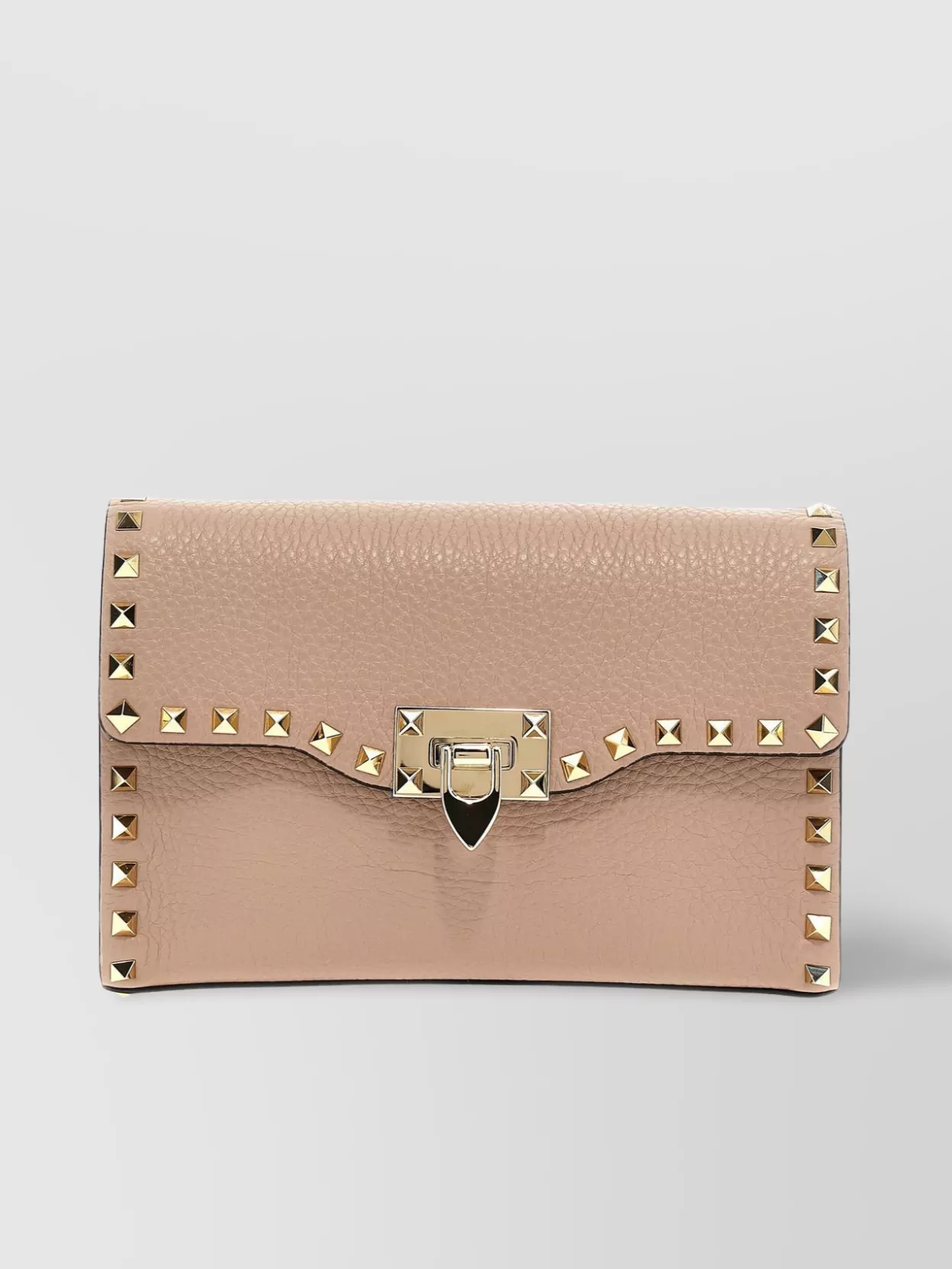
Valentino Bags Under 1500 Dollars: The True Entry Point
Three thousand dollars or more is where most people are introduced to this house, and it is equally where they conclude the label is out of reach and abandon the idea. The thing that assumption misses is a genuine sub-$1,500 shelf, entirely real and made of full-standard product rather than remainders. It is small, it is concentrated in two lines, and it asks you to think about format rather than about size. Here is a survey of everything the brand’s own United States site lists under $1,500, given in observed 2026 market prices rather than an official price list, plus what each one is genuinely good for. The same fifteen hundred also takes a second path, through the pre-owned market, which is by now the only home of the archive. Before you decide, read both halves: the cheapest new valentino bag and the best bag for $1,500 are not always the same object.
Where fifteen hundred dollars genuinely reaches
Start off with the size of it: the shelf is there, and narrow. Throughout the whole current line-up, only two families reach below $1,500: VLogo Signature and Rockstud. The rest of the lines each open above that: Rockstud Spike at $2,400, Locò at $2,700, VSling at $3,350 and Panthea valentino logo at $3,800. The shelf stretches across more ground than its size suggests, reaching from $650 for a grainy calfskin VLogo Signature clutch to $1,450 for a nappa VLogo mini bucket. The move beyond is a step rather than a slope: the next rung starts around $1,650 with a small Rockstud crossbody, and $1,750 buys a laminated Rockstud mini shopping bag or a VLogo mini bowling. The real takeaway of that gap: with a ceiling of fifteen hundred, another two hundred dollars changes nothing, whereas four hundred changes the category entirely.
The shelf, listed in full
Just one table contains the entire shelf, and it is smaller than you might assume. Every figure is an observed 2026 market price on the brand’s own United States site, and prices move with material, colour and season. Note how much of the shelf is small leather goods rather than bags, which is normal for a house at this level. Material, not size, is doing the pricing, which is why the same silhouette in raffia costs a hundred dollars more than in grainy calfskin. Nothing is reduced in construction terms against pieces four times the price. Volume is the only concession you lose down here.
| Piece | Material seen | 2026 observed US price | What it does best |
|---|---|---|---|
| VLogo Signature clutch | Grainy calfskin | $650 to $790 | The lowest real rung of the house |
| VLogo Signature clutch | Moiré | $750 | Evening wear and events |
| Rockstud wallet | Laminated calfskin | $1,250 | Everyday carry with the studs visible |
| Rockstud mini shopping bag | Grainy calfskin or suede | $1,390 | The most practical shape here, and the tote entry |
| Rockstud mini shopping bag | Raffia | $1,490 | Hot weather and trips |
| VLogo mini bucket | Nappa | $1,450 | The softest body here |
Why the clutch is hardly a consolation prize
The VLogo Signature clutch, $650 to $790 in grainy calfskin, is the lowest-cost way into the house, and nothing about it feels like a token. Hardware and closure are the same thing here — the V emblem — which is why the design has no use for scale to work. The moiré version, at $750, falls between the two calfskin prices and steers the piece towards evening, which is where clutches live in any case. The honest limitation is capacity, since a clutch holds a phone, a card case and a key and then stops. The honest advantage is that clutches age slowly, spending most of their lives indoors and rarely meeting pavement, rain or a car door. Buying for the object rather than the capacity? Start here, and spend what you save on a colour you would normally avoid.
The argument for the wallet
At $1,250, a laminated calfskin Rockstud wallet seems a strange recommendation until you work out how often it would actually be in your hand. The wallets keep the studs, engraving standards and Made in Italy construction of the bags, so nothing about them announces a position at the bottom of the range. It is also the piece other people see most, since it comes out at every till and every restaurant table. There is a format point worth knowing here too: the house also builds a Rockstud chain wallet at $1,250, which functions as a small valentino crossbody bag when the chain is attached. That is worth knowing because the brand’s own United States site shows no crossbody category page at all, listing bags under shoulder, tote, top handle, clutch and small leather goods headings instead, which makes chain wallets easy to overlook. For the cheapest way to wear the motif rather than hold it, that is the piece to search out.
The mini shopping bag, and the tote entry
This is the right answer for most buyers, and the reason is plain: it is a bag you can actually fill. The Rockstud mini shopping bag runs $1,390 in grainy calfskin or suede and $1,490 in raffia, which puts both versions comfortably inside the budget. The practical choice is grainy calfskin, whose grain conceals the scuffs a tote picks up while asking for no care routine. Richer to look at and better at holding colour, suede nonetheless brings a brush, a protector spray and a strict policy on rain. Raffia is a seasonal pleasure, not a year-round bag; at a hundred dollars more it is both the least rational and the most enjoyable purchase on the shelf. Whatever version you take, the studs do not change, and the bag projects across a room far better than the figure implies.
The mini bucket, the shelf’s top rung
The VLogo mini bucket, $1,450 in nappa, leads the shelf on price and leads it on softness. Nappa, yielding and finely finished, makes the bag drapes rather than holds a shape — and that is precisely its character. It is also the material most in need of care, since nappa marks easily and does not disguise wear. Against that stands a V emblem doing structural work as the closure, and a bag that looks considered instead of entry-level. Set against the mini shopping bag, the question is simple: do you want capacity or an object? The bucket is mostly the latter. Neither choice is wrong; only note that a laptop sleeve fits in one of them, and not in this one.
Spending the same budget second-hand
Fifteen hundred dollars behaves very differently on the resale market, and for some buyers that is the better trade. One aggregator’s pre-owned listings for the house have been observed spanning $54 to $6,300 with an average close to $817, which tells you how much sits below this shelf rather than above it. Discontinued and archive lines exist only in this market now — the VLogo Escape tote is reported discontinued, Supervee is resale-only with a VLogo shoulder bag observed pre-owned around $866, and a large One Stud nappa tote has been seen at $1,695 through a third-party retailer rather than an official channel. According to retention data from one major platform, Valentino handbags keep roughly 41 per cent of retail across the house, while motif styles sit higher — a Rockstud pouch crossbody around 50 per cent. Read that as market observation, not investment advice; it cuts both ways, explaining both why pre-owned is good value and why buying new to resell is not a plan. Use established platforms that authenticate before listing, and read the trap below as required.
The trap that derails budget buyers
Precisely the price point covered here is where this risk concentrates, so it earns a section rather than a footnote. Nordstrom Rack, Saks OFF 5TH and TJ Maxx all three carry handbags labelled Valentino; those are the work of Mario Valentino S.p.A., a Naples leather goods house founded in 1952 and wholly separate from the Rome couture house founded in 1960. The goods are authentic; they are simply a different company at a different price, and buying one while believing you have found a discounted valentino garavani bag is the mistake to avoid. The label settles it in a second, because the luxury house is contractually obliged to print GARAVANI alongside VALENTINO on its leather goods. Exactly one off-price channel has been verified as holding the luxury line — THE OUTNET — though it has not been established how deep the reductions go. Maker first, price second: keep to that order and the entire shelf remains exactly as good as it looks.